
Signs Your Dog Is Ready for Boarding — or Not Yet
If you're weighing whether boarding is the right fit for your dog, you're already doing the most important thing: thinking it through. Every dog is different, and there's no single "right" answer — but there are some helpful signs to look for as you decide.
Signs Your Dog Is Likely a Great Fit
They're comfortable around new people and places. Dogs who adjust fairly easily to new environments — a friend's house, a car ride, a new walking route — tend to settle into boarding more smoothly too.
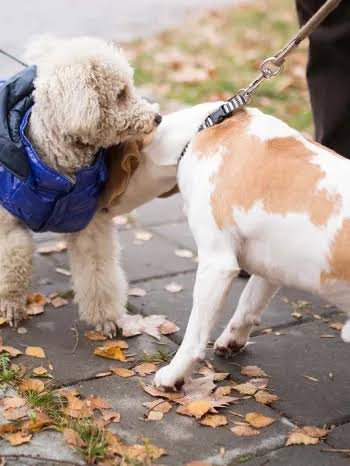
They've had positive experiences with other dogs. This matters most if your facility includes group play. A dog who enjoys the dog park or gets along well with others at home is usually a good candidate for social boarding.
They can be away from you without major distress. Some dogs handle short separations just fine — a few hours home alone, a stay with a family member — without excessive pacing, barking, or destructive behavior.
They're food and routine motivated. Dogs who settle into new routines quickly, especially around mealtimes and sleep, tend to have an easier transition.
Signs It Might Take Some Extra Support
Noticeable separation anxiety. If your dog struggles even with short absences — excessive whining, destructive behavior, or refusing to eat when you're gone — that's worth mentioning to us ahead of time. It doesn't mean boarding is off the table, but it does mean we'll want to talk through a plan together.
Limited exposure to other dogs. If your dog hasn't spent much time around other animals, that's okay — it just means a quieter, more individualized stay (rather than group play) might be the better starting point.
A history of reactivity or fear in new environments. This is important information for us to have, not a red flag that rules boarding out. Many dogs with these tendencies do wonderfully once we understand their triggers and build a plan around them.
They're very young or very senior. Puppies and older dogs often just need a slightly different approach — more frequent check-ins, adjusted activity levels, or a quieter space — rather than a "no."
The Best First Step: Just Talk to Us
You know your dog better than anyone, and we want to hear about their personality, quirks, and needs before their first stay — not guess at them. A quick conversation (or a trial half-day or overnight stay) can tell you a lot more than any checklist.
Boarding isn't about whether your dog is "perfect" for it — it's about making sure we have the right plan in place so they feel safe and comfortable while you're away.
Thinking About a First Stay?
We're happy to talk through your dog's specific personality and answer any questions before you book. A short trial stay is often a great way to ease into it.

Who We Are
What Colors Do Dogs See? How Color Can Help Create a Calming Environment
If you've ever wondered what the world looks like through your dog's eyes, you might be surprised to learn that dogs don't see only in black and white.
Dogs can see colors, but they experience them differently than people do. Understanding how dogs see their surroundings can help pet owners make better choices when selecting toys, bedding, and even creating comfortable spaces for their pets.
At Mississippi Ridge Kennel in Bellevue, Iowa, we're always interested in the little things that can help make dogs more comfortable—especially when they're staying away from home.
What Colors Can Dogs Actually See?
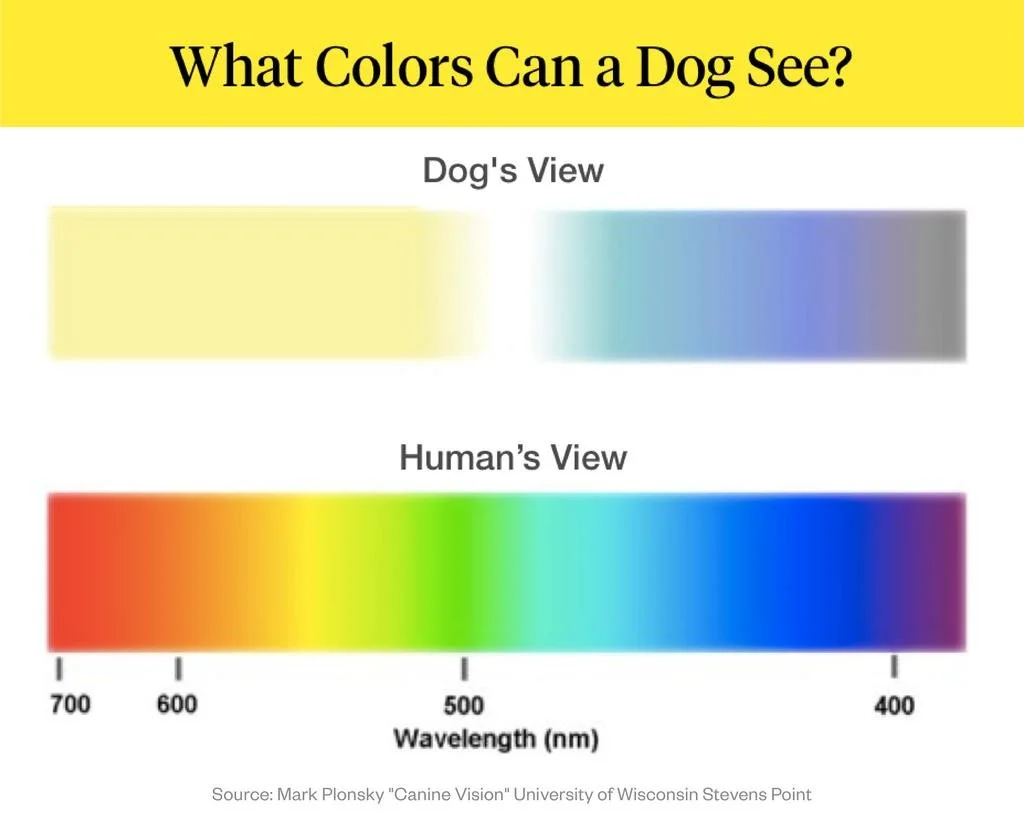
People normally have three types of color-detecting cone cells in their eyes, while dogs have two. This means a dog's color vision is somewhat similar to red-green color blindness in humans.
Dogs are particularly good at seeing:
Blue
Yellow
Shades of gray
Muted brownish tones
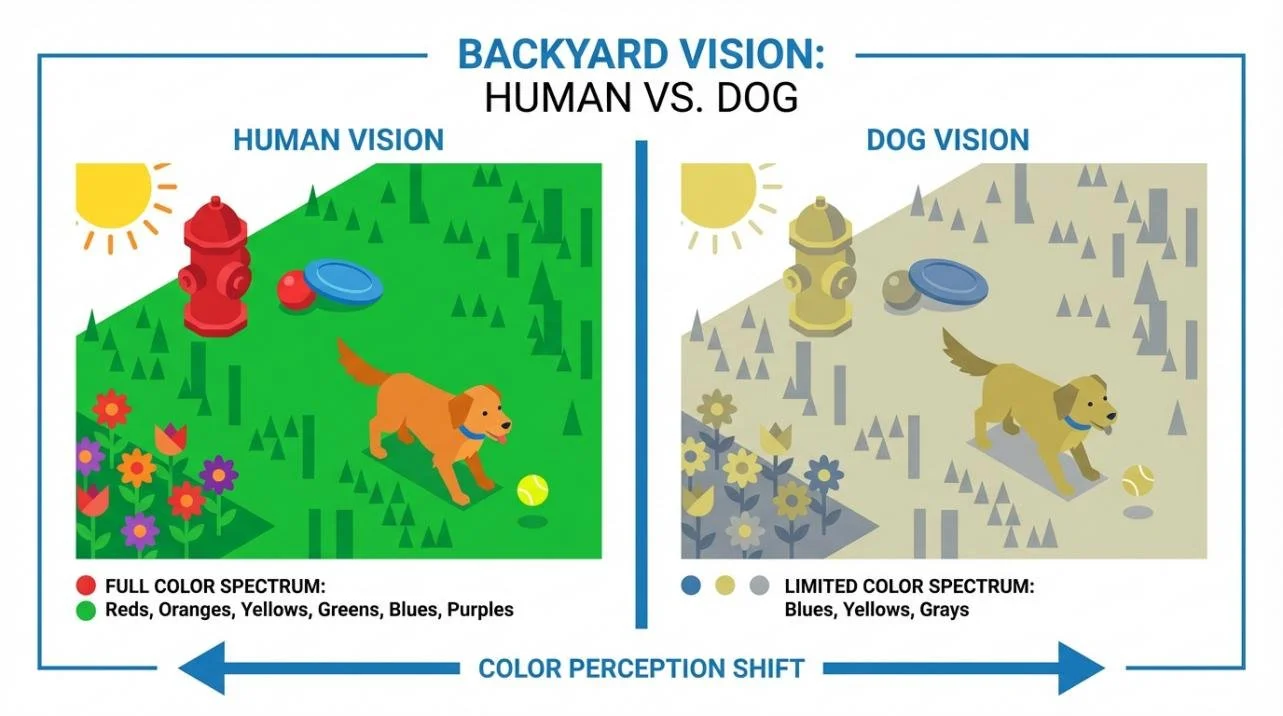
Red, orange, and green don't appear as bright and distinct to dogs as they do to us.
For example, a bright red ball in green grass may be extremely easy for you to see, but those colors can appear much more similar from your dog's perspective.
A blue toy, on the other hand, may provide much stronger contrast and be easier for your dog to locate.
Are Certain Colors Calming to Dogs?
You may have heard that certain colors—especially blue—can calm dogs.
It's important not to oversimplify this.
Color alone isn't likely to transform an anxious dog into a relaxed one. Noise levels, unfamiliar smells, other animals, handling, comfortable temperatures, bedding, exercise, routine, and positive interactions with people can have a much greater effect on how comfortable a dog feels.
However, color can still be considered as one part of the overall environment.
Because dogs can distinguish blue well, soft blues and other muted colors can be good choices when designing dog-friendly spaces where the goal is to avoid an overly stimulating environment.
Rather than relying on one "calming color," the goal should be to create an overall space that feels comfortable and predictable.
Why Environment Matters When Dogs Are Boarding
Boarding can be a completely new experience for a dog.
Think about everything your dog encounters when entering a boarding kennel:
New smells. New people. Other dogs. Different sounds. A new sleeping area. A completely different daily routine.
Some dogs walk through the door ready to make friends and explore. Others need a little more time to adjust.
That's why a good boarding environment isn't just about having a clean kennel. The entire experience matters.
Comfortable resting areas, appropriate temperatures, reduced unnecessary noise, exercise, cleanliness, regular routines, and positive human interaction can all contribute to a better boarding experience.
At Mississippi Ridge Kennel, serving pet owners from Bellevue, Dubuque, and surrounding communities in Eastern Iowa, we believe those details matter.
Try This Simple Color Experiment With Your Dog
Here's a fun experiment you can try at home.
Take three similar toys that are different colors—such as blue, yellow, and red—and place them around your yard.
Then see which ones your dog seems to notice or locate most easily.
Don't be surprised if the blue or yellow toy stands out more.
You can also keep this in mind the next time you're buying balls, frisbees, or outdoor training toys.
We might naturally choose a bright red or orange toy because we can see it easily.
Your dog may have a completely different opinion!
Choosing Toys Your Dog Can See
If you're shopping for a toy that you want your dog to locate easily, particularly outdoors, consider choosing:
Blue or yellow toys with strong contrast against their surroundings.
A green toy sitting in green grass might look great to us but may not provide the same contrast for a dog.
Color isn't the only consideration, of course. The toy should also be appropriately sized, durable, and safe for your individual dog's play style.
Dogs Experience the World Differently Than We Do
Dogs may see fewer colors than humans, but vision is only one part of how they experience their surroundings.
Their incredible sense of smell and sensitive hearing give them information about the world that we can't experience in the same way.
Understanding these differences is one more way we can become better pet owners.
At Mississippi Ridge Kennel in Bellevue, Iowa, our goal is to provide dogs and cats with a clean, comfortable, caring place to stay while their families are away.
Whether your dog is outgoing and ready to make new friends or needs a little extra time to settle in, we believe every pet deserves individual attention and thoughtful care.
Looking for Dog or Cat Boarding Near Bellevue or Dubuque, Iowa?
Mississippi Ridge Kennel provides boarding and other pet-care services for families throughout Bellevue, Dubuque, Jackson County, and the surrounding Eastern Iowa area.
Follow Mississippi Ridge Kennel on Facebook, Instagram, and TikTok to see our guests, kennel activities, pet-care tips, and behind-the-scenes moments.
And when you're planning your next trip, we'd love the opportunity to care for your four-legged family member.
Mississippi Ridge Kennel — Caring for them while you're away.